Misophonia is decreased tolerance to specific sounds, not simply annoyance or PTSD
EMDR for misophonia: pilot evidence, CBT, and clinical limits
Review EMDR for misophonia with the 10-adult pilot, consensus definition, stronger CBT evidence, differential assessment, and remote limits.
By the EMDRSuite Editorial Team
Product claims checked against the current EMDRSuite code and interface.
No independent clinical reviewer is named for this guide.
Define the sound response before treating a memory
The consensus definition describes decreased tolerance to specific sounds or associated stimuli, commonly with strong anger, disgust, anxiety, or distress and functional impairment. Loudness alone does not define it, and misophonia is not interchangeable with tinnitus, hyperacusis, sensory overload, OCD, autism, trauma, or ordinary dislike.
Assess triggers, context, impairment, hearing and medical factors, sensory profile, neurodevelopment, mood, anxiety, OCD, PTSD, aggression, avoidance, family accommodation, self-harm, and suicide risk. Do not infer a hidden trauma because a sound reaction is intense.
Direct EMDR evidence is a 10-adult uncontrolled pilot
The direct pilot enrolled 10 adults who were waiting for CBT or had not responded to CBT. Eight completed treatment, delivered in a mean 2.6 sessions around emotionally disturbing misophonia-related memories; three of eight showed clinically significant improvement and secondary outcomes did not improve significantly.
A small case series without randomization, blinding, active comparison, or stable diagnostic standards cannot establish effectiveness, who benefits, durability, or uncommon harms. It supports a research question, not a claim that EMDR is an established misophonia treatment.
CBT has the stronger comparative evidence
An evaluator-blinded trial randomized 54 adults to group CBT or waitlist. CBT reduced symptoms and 37% were clinically improved versus 0% on waitlist, with effects maintained at one year. A treatment review found CBT the most studied approach, while newer youth and exposure-based trials remain developing evidence.
If EMDR is considered, identify a defensible trauma or disturbing-memory target and measure that separately from sound-trigger frequency, distress, avoidance, relationships, work or school, and accommodation. Do not displace audiology, medical assessment, CBT skills, or environmental planning when indicated.
Remote sessions need a trigger and interruption plan
Agree which sounds may occur, whether headphones help or worsen risk, a nonverbal stop signal, regulation options, privacy, household boundaries, and what happens if rage, panic, dissociation, self-harm risk, or connection loss emerges. Do not deliberately play trigger sounds without formulation, consent, competence, and a monitored rationale.
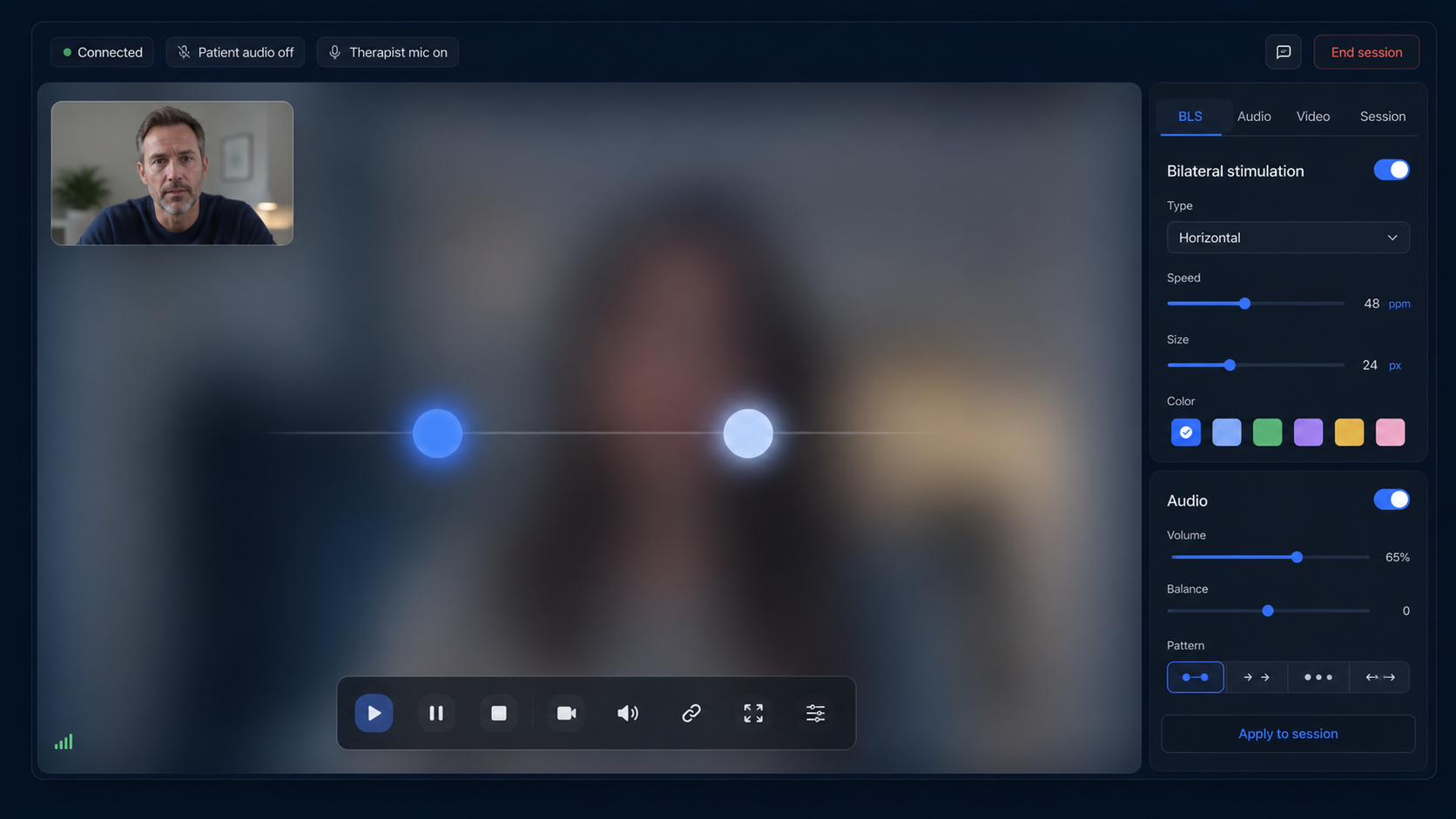
EMDRSuite does not diagnose misophonia, test hearing, distinguish sensory or psychiatric conditions, select exposure, monitor aggression or risk, control environmental sounds, or provide emergency response. It only supports the qualified therapist's remote workflow.
FAQ
EMDR for misophonia
Is EMDR an established treatment for misophonia?
No. Direct evidence is one uncontrolled 10-adult pilot; comparative evidence is stronger for CBT.
Does misophonia prove trauma is present?
No. Trauma may be relevant for some people, but the reaction needs differential assessment rather than a presumed cause.
Should therapists play trigger sounds during EMDR?
Not automatically. Any planned trigger use requires competence, consent, formulation, monitoring, and a clear stop plan.
Can EMDRSuite diagnose or expose misophonia?
No. It does not diagnose, test hearing, choose exposure, monitor risk, or control the patient's environment.
References
EMDR for misophonia: pilot evidence, CBT, and clinical limits
EMDRSuite
Put the guide into practice with EMDRSuite
Run remote EMDR with visual BLS, bilateral sounds, secure patient links, video-ready sessions, saved settings, and notes.
Continue with related EMDR guides