Describe harmful behavior before assigning a personality label
EMDR after narcissistic abuse: evidence, labels, and safety
Consider EMDR after emotional or narcissistic abuse without diagnosing an absent partner, using coercive-control evidence, safety assessment, and treatment limits.
By the EMDRSuite Editorial Team
Product claims checked against the current EMDRSuite code and interface.
No independent clinical reviewer is named for this guide.
Narcissistic abuse is a popular label, not a diagnosis
People use the term for humiliation, gaslighting, threats, isolation, surveillance, financial control, sexual coercion, blame, intermittent affection, or other harmful patterns. The person seeking help deserves a careful account of impact and safety without requiring a diagnosis for the other person.
A therapist should not infer narcissistic personality disorder from one partner's report or treat every painful relationship as abuse. Document observable behavior, context, frequency, power, fear, injury, coercion, current contact, children, digital access, legal issues, and the survivor's own words.
Narcissistic traits do not explain every act of partner violence
A meta-analysis of 22 studies and 11,520 participants found a weak overall association between narcissistic traits and intimate-partner-violence perpetration, r = .15. Psychological and cyber violence showed weak associations, while physical violence was not significantly related.
The studies used self-report and examined traits at group level. This result neither diagnoses an individual nor proves that narcissism caused a specific behavior. Safety planning should respond to what is happening, not wait for a personality label.
Coercive control and mental health require a wider response
A review identified 68 coercive-control studies; pooled correlations were moderate for PTSD, r = .32, and depression, r = .27. Association does not mean everyone develops a disorder or that trauma therapy stops ongoing control.
A review of 80 psychosocial intervention studies found modest short-term depression and PTSD effects, low-quality evidence, unclear harms, and no reduction in repeat violence. Integrated advocacy and psychological support appeared favorable. Current danger, housing, finances, legal advice, safeguarding, and confidential communication can be more urgent than processing.
EMDR may target assessed memories, not certify the relationship story
If PTSD or another formulated memory target is present and current safety permits, qualified clinicians may consider guideline-supported trauma treatment. Agree what will be measured and preserve agency about contact, separation, reporting, forgiveness, and interpretation.
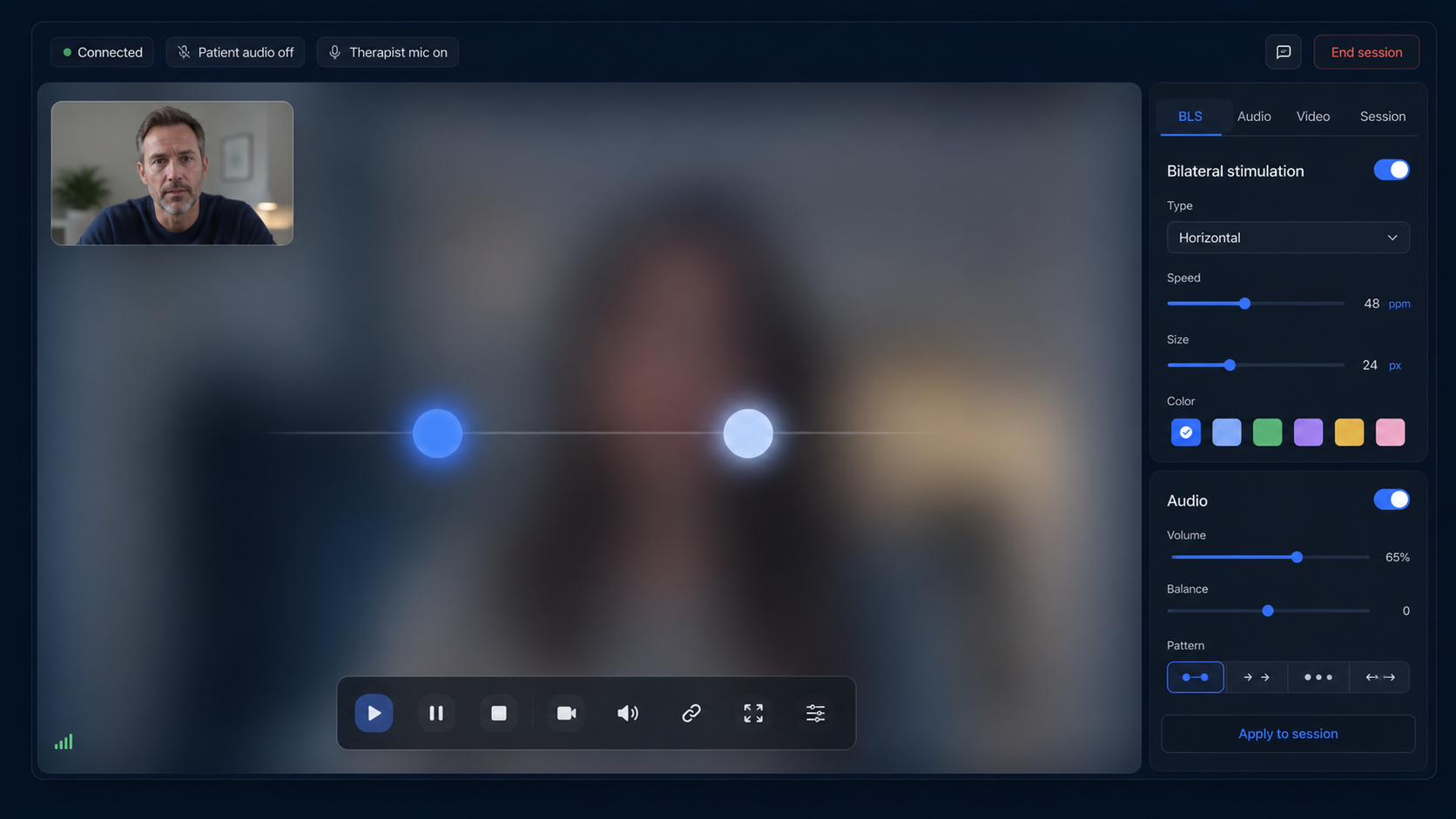
EMDRSuite supplies private links, video, bilateral stimulation, and records. It does not diagnose either partner, verify gaslighting, investigate abuse, assess stalking or lethality, create a safety plan, provide legal or crisis services, choose memories, or guarantee recovery.
FAQ
EMDR for narcissistic abuse
Is narcissistic abuse a clinical diagnosis?
No. Describe the behaviors and their impact without diagnosing an absent person.
Does narcissism prove partner violence?
No. Research shows only a weak group-level association and cannot explain an individual case.
Can EMDR be used while control is ongoing?
Possibly in some plans, but current safety, privacy, and practical protection may take priority.
Can EMDRSuite verify abuse?
No. It is session software and cannot investigate relationships or assess danger.
References
EMDR after narcissistic abuse: evidence, labels, and safety
EMDRSuite
Put the guide into practice with EMDRSuite
Run remote EMDR with visual BLS, bilateral sounds, secure patient links, video-ready sessions, saved settings, and notes.
Continue with related EMDR guides