Safe/Calm Place is a Phase 2 resource, not proof that a client is safe or ready
EMDR Safe/Calm Place exercise: purpose, evidence, and limits
Understand the EMDR Safe or Calm Place exercise, Phase 2 purpose, evidence limits, wording choices, activation risks, training, and remote boundaries.
By the EMDRSuite Editorial Team
Product claims checked against the current EMDRSuite code and interface.
No independent clinical reviewer is named for this guide.
EMDRIA defines it as a Phase 2 resourcing exercise
EMDRIA defines Safe/Calm Place as identifying positive imagery with associated thoughts, emotions, and body sensations that evoke safety or calm. It is used in Phase 2 to strengthen access to a state that may support recovery of emotional stability during disturbance.
Safe Place and Calm Place are common labels for the same broad exercise, but some clinicians prefer calm, peaceful, steady, or another client-chosen word because 'safe' may feel impossible, inaccurate, or activating. The exercise remains one option inside preparation, not the whole of Phase 2.
A professional definition is not an isolated efficacy trial
EMDRIA training and practice material establish that the exercise belongs to EMDR preparation. They do not show that Safe/Calm Place alone treats PTSD, prevents adverse reactions, or determines who can begin reprocessing.
No controlled component trial, validated dose, universal response threshold, or readiness cut-off specific to Safe/Calm Place was identified in the reviewed sources through 28 August 2026. A temporary state change should not be mistaken for durable regulation or treatment outcome.
Imagery can be inaccessible, mixed, or activating
Some clients cannot visualize, have never experienced safety, associate places with threat, or notice grief, shame, dissociation, surveillance, loneliness, or loss when invited to imagine one. The wording, sensory channel, cultural meaning, and client's right to decline matter more than completing a standard image.
The exercise does not create actual environmental safety, resolve ongoing danger, replace risk assessment, or guarantee dual attention. Monitor orientation and activation, establish a stop route, and use another preparation strategy when the proposed resource does not remain supportive.
This reference does not publish a Safe Place script
Search demand for scripts, PDFs, worksheets, and handouts does not authorize copying training material. This page explains terminology, evidence limits, and safeguards without reproducing prompts, installation wording, bilateral-stimulation sets, or clinical decision rules.
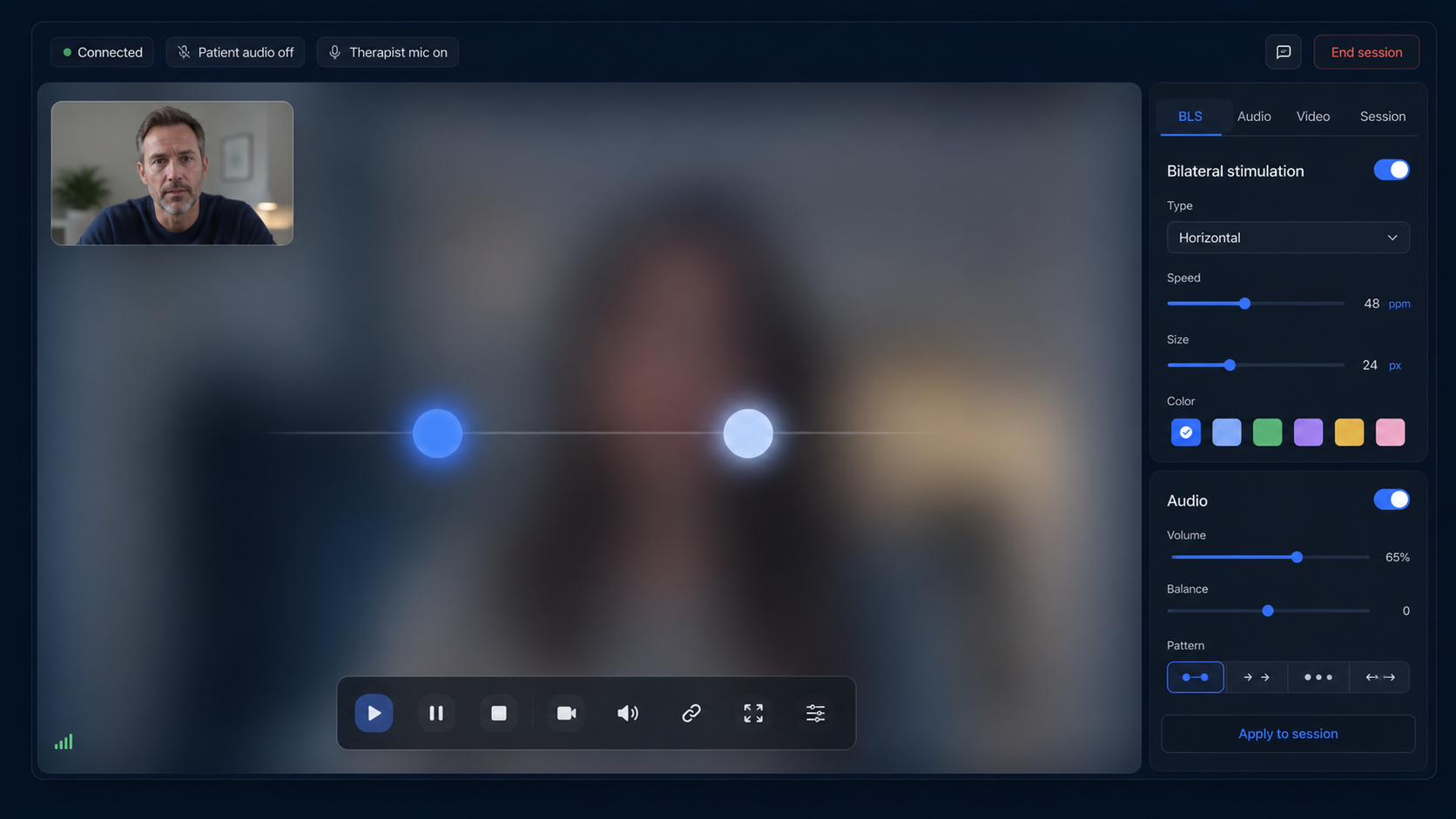
EMDRSuite can provide therapist-controlled BLS, video, patient links, and notes. It does not generate a safe place, interpret imagery, score regulation, establish real-world safety, or decide readiness for reprocessing.
FAQ
EMDR safe place
Are Safe Place and Calm Place the same in EMDR?
They are commonly used for the same broad Phase 2 resourcing exercise. Calm or another client-chosen term may be preferable when the word safe is inaccurate or activating.
Does successful imagery prove readiness for reprocessing?
No. Accessing a calmer state is one clinical observation, not a validated readiness test or guarantee of stability.
What if the exercise makes a client more distressed?
Pause and reassess. Imagery should not be forced; a different sensory, relational, embodied, or practical preparation strategy may fit better.
Does this page provide the Safe Place script?
No. It provides a sourced professional overview without reproducing protected clinical instructions or worksheets.
References
EMDR Safe/Calm Place exercise: purpose, evidence, and limits
EMDRSuite
Put the guide into practice with EMDRSuite
Run remote EMDR with visual BLS, bilateral sounds, secure patient links, video-ready sessions, saved settings, and notes.
Continue with related EMDR guides