EMDR-PEP is Foster and Lendl's named performance model, not proof of peak performance
EMDR Performance Enhancement Protocol: evidence and limits
Review EMDR-PEP for sport, work, and performing arts: origin, small-study evidence, scope boundaries, protected scripts, and ethical performance practice.
By the EMDRSuite Editorial Team
Product claims checked against the current EMDRSuite code and interface.
No independent clinical reviewer is named for this guide.
Foster and Lendl developed EMDR-PEP
The Legacy Library attributes the EMDR Performance Enhancement Psychology Protocol, or EMDR-PEP, to Sandra Foster and Jennifer Lendl. Their published model addresses performance anxiety, inhibiting beliefs, setbacks, injury recovery, strengths, focus, and future performance across work, sport, and creative settings.
EMDR-PEP is a named adaptation, not a generic synonym for treating test anxiety, standard future template, coaching, or all EMDR work with athletes. This page owns protocol and peak-performance intent while the existing test-performance-anxiety guide remains the owner for exams and anxiety treatment.
The evidence base is small and heterogeneous
The earliest peer-reviewed report contains four workplace cases. Later literature includes a single professional golfer treated with EMDR plus graded exposure and a seven-golfer yips series, with follow-up available for six and authors calling for larger, better studies.
These reports are promising but cannot establish that EMDR-PEP itself improves objective performance, identify a specific active component, or generalize across sports and professions. No large independent randomized trial of the complete EMDR-PEP was identified through 28 August 2026.
Performance work has clinical and professional boundaries
A performance block may involve trauma, anxiety, injury, pain, movement disorder, sleep, substance use, coaching context, team dynamics, or unsafe pressure. Mental-health treatment, sport psychology, medical assessment, and executive coaching have different competencies, consent, confidentiality, and dual-role risks.
Goals should be client-led and should not promise a result, selection, promotion, time, score, or competitive advantage. For athletes, Foster and Lendl explicitly note the need for rigorous sport-psychology and professional-sport knowledge in addition to relevant clinical competence.
This evidence page does not publish the protocol forms
The original chapter includes forms and a script. This page does not reproduce those materials, the Brief Intervention Focusing Protocol, inner-advisor exercises, or any step-by-step performance sequence. Use authorized publications and appropriate training.
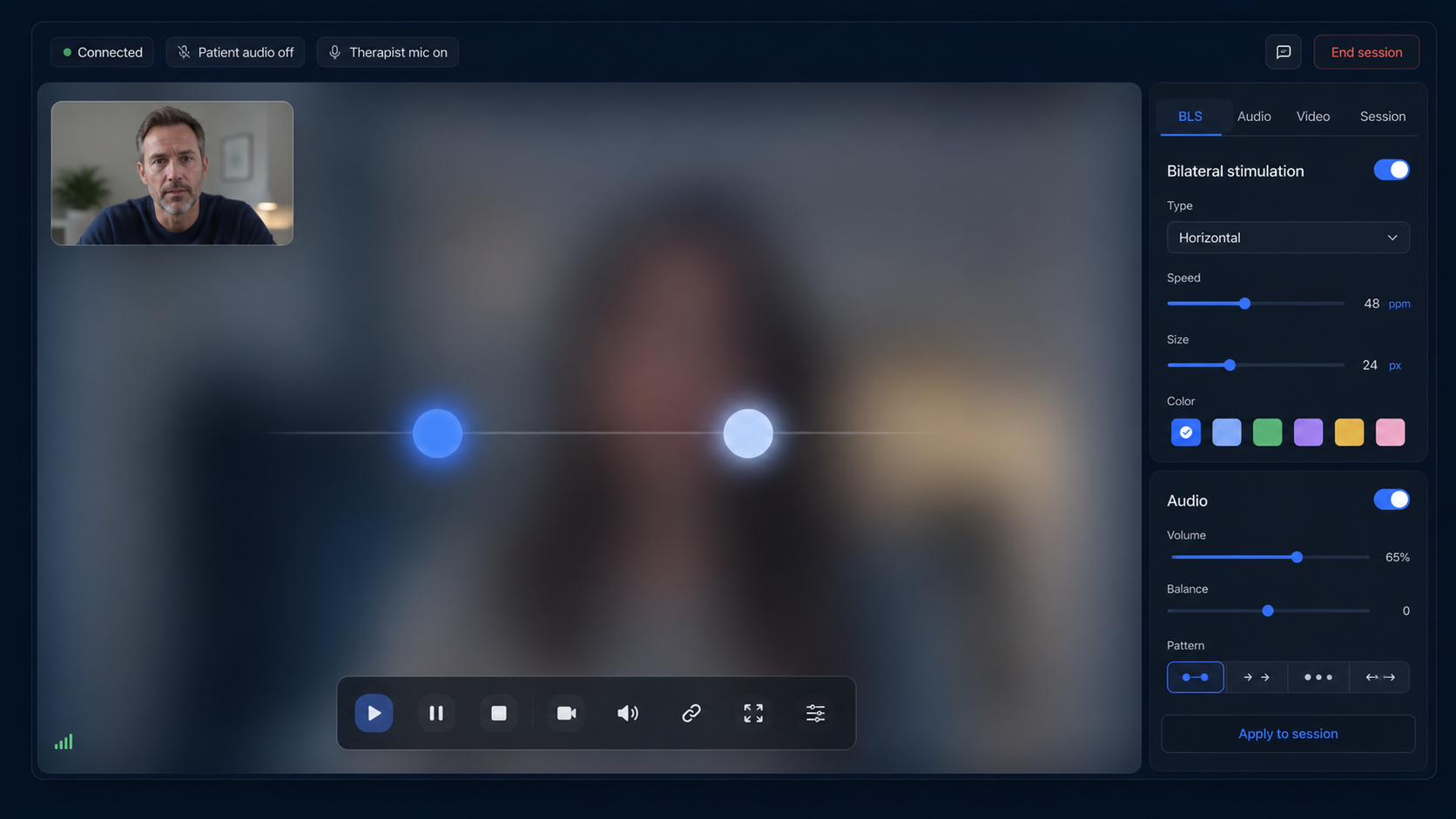
EMDRSuite provides remote video, BLS, patient access, and documentation. It does not assess athletic ability, generate performance goals, administer EMDR-PEP, predict outcomes, or certify competence in sport psychology or coaching.
FAQ
EMDR performance enhancement protocol
What is EMDR-PEP?
It is Foster and Lendl's EMDR Performance Enhancement Psychology Protocol for performance-related blocks and goals in work, sport, and creative settings.
Is it the same as EMDR for test anxiety?
No. Test anxiety is a clinical presentation that may use standard or adapted treatment. EMDR-PEP is a named performance-enhancement model with a broader positive-performance focus.
Does research prove that it creates peak performance?
No. Evidence includes small case reports and case series. No large independent randomized trial of the complete protocol was identified.
Can I download the EMDR-PEP script here?
No. This page does not reproduce the protected forms or script. Consult the original chapter and authorized training.
References
EMDR Performance Enhancement Protocol: evidence and limits
EMDRSuite
Put the guide into practice with EMDRSuite
Run remote EMDR with visual BLS, bilateral sounds, secure patient links, video-ready sessions, saved settings, and notes.
Continue with related EMDR guides