Art therapy is not Accelerated Resolution Therapy and neither is EMDR
EMDR vs art therapy for trauma: evidence, process, and integration
Compare EMDR and credentialed art therapy by clinical process, trauma evidence, expression, training, integration, and remote-session limits without confusing ART.
By the EMDRSuite Editorial Team
Product claims checked against the current EMDRSuite code and interface.
No independent clinical reviewer is named for this guide.
Art therapy uses creative media; EMDR uses a trauma-treatment protocol
The American Art Therapy Association defines art therapy as a mental health profession using active art-making, creative process, psychological theory and a psychotherapeutic relationship. EMDR uses an eight-phase protocol with target assessment, dual attention, BLS and reevaluation.
Art therapy is not simply coloring and EMDR is not simply watching a dot. ART in Accelerated Resolution Therapy is a third, different acronym; clinicians should name the actual discipline and procedure in consent and records.
The trauma evidence bases answer different questions
A 2024 meta-analysis identified 21 randomized trials with 868 participants across arts therapies after trauma. The pooled PTSD-specific result did not reach conventional statistical significance overall, with heterogeneity and a need for standardized protocols; subgroup findings should not be generalized to every art-therapy format.
VA/DoD found insufficient evidence for or against creative arts therapies for PTSD and strongly recommends EMDR. A pilot with 11 veterans tested art therapy added to CPT, not art therapy against EMDR and not art therapy as a replacement for first-line PTSD care.
Integration requires two scopes, not one blended label
A clinician considering integration should identify who is qualified in each modality, whether art-making is treatment, assessment, communication or an adjunct, and how images will be stored, shared and discussed. Consent should address ownership, privacy, cultural meaning and limits on interpretation.
Track PTSD symptoms, functioning, engagement and adverse effects while distinguishing the contribution of each component. Creative expression can be valuable without proving a memory accurate or making a combined protocol evidence based.
EMDRSuite does not turn digital media into art therapy
Remote creative work raises privacy, camera framing, materials, storage and disposal questions. Remote EMDR adds BLS pacing, stop signals, emergency planning and connection contingencies.
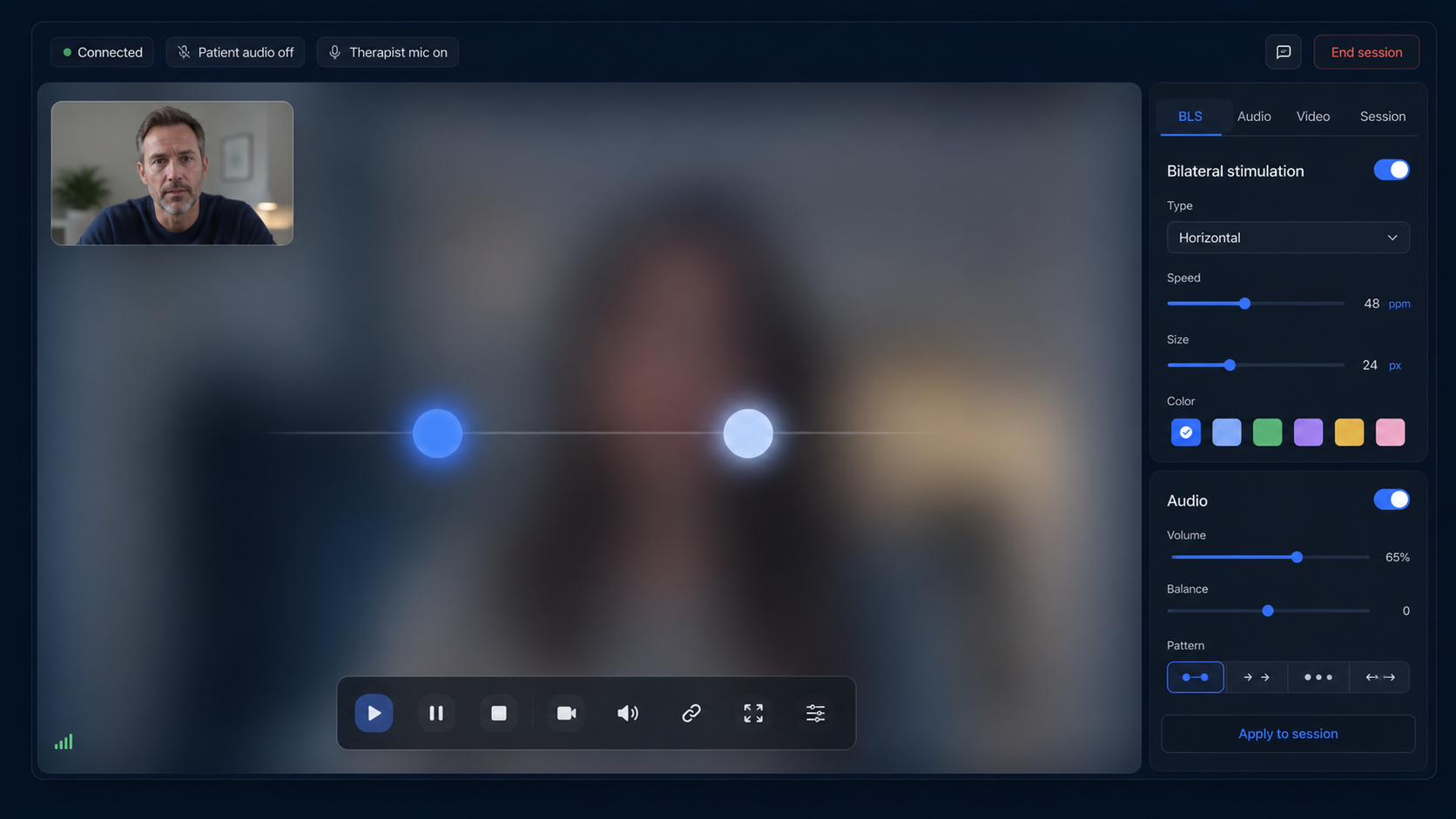
EMDRSuite supports video and therapist-controlled EMDR stimulation. It does not provide art therapy, interpret artwork, assign creative media, or establish art-therapy competence.
FAQ
EMDR vs art therapy
Is art therapy the same as EMDR?
No. They use different professional frameworks, procedures and training.
Does ART mean art therapy?
Not in the phrase Accelerated Resolution Therapy. This page concerns credentialed art therapy.
Can art therapy be combined with EMDR?
Qualified clinicians may integrate carefully, but the combination needs clear rationale, consent and separate scope.
Does EMDRSuite analyze drawings?
No. It provides EMDR video and BLS controls and does not interpret creative work.
References
EMDR vs art therapy for trauma: evidence, process, and integration
EMDRSuite
Put the guide into practice with EMDRSuite
Run remote EMDR with visual BLS, bilateral sounds, secure patient links, video-ready sessions, saved settings, and notes.
Continue with related EMDR guides