Do not individualize an organizational safety problem
EMDR for workplace bullying: evidence, PTSD, and work action
Separate workplace bullying, PTSD, burnout, and legal or organizational action when considering EMDR, using mental-health, sleep, and suicide evidence.
By the EMDRSuite Editorial Team
Product claims checked against the current EMDRSuite code and interface.
No independent clinical reviewer is named for this guide.
Workplace bullying is an exposure pattern, not one diagnosis
Bullying or mobbing can involve repeated humiliation, exclusion, threats, impossible demands, sabotage, rumors, discriminatory harassment, or misuse of authority. Distinguish it from a single conflict, lawful performance management, occupational violence, discrimination, moral injury, burnout, and ordinary work pressure while taking reported harm seriously.
Assess what is current, frequency, witnesses, power, retaliation, job and financial dependence, occupational health, union or professional support, local policy and law, sleep, depression, anxiety, PTSD, substance use, self-harm, suicide risk, and fitness for work. Therapy does not adjudicate an employment dispute.
Large associations do not prove a purely individual problem
A meta-analysis found 65 cross-sectional effect sizes with 115,783 participants: workplace bullying correlated with depression, r = .28, anxiety, r = .34, and stress complaints, r = .37. Twenty-six longitudinal effects with 54,450 participants found an association with later mental-health complaints, r = .21.
Baseline mental-health complaints also predicted later reported bullying exposure, r = .18. Bidirectionality, self-report, selection, and workplace context complicate causal claims. The findings support prevention and support, not blaming the worker or reducing the problem to resilience.
Sleep and suicide findings require active risk assessment
A sleep review included 26 studies; bullied workers had 2.31 times the odds of sleep problems cross-sectionally and 1.62 prospectively, with low-to-moderate evidence. A suicide review included 25 articles and found adjusted odds of 2.03 for suicidal ideation and 2.67 for suicidal behavior.
These are group associations, not individual predictions. Suicidal thoughts, severe insomnia, acute threat, occupational exposure, or deteriorating function require direct assessment and appropriate local pathways rather than waiting for memory processing.
EMDR may address a formulated event but cannot repair the workplace
The cited evidence does not establish EMDR as a workplace-bullying treatment. EMDR may be considered when a qualified assessment identifies PTSD or a specific distressing event, while organizational prevention, documentation, advocacy, occupational care, legal advice, leave, accommodation, or job change may also matter.
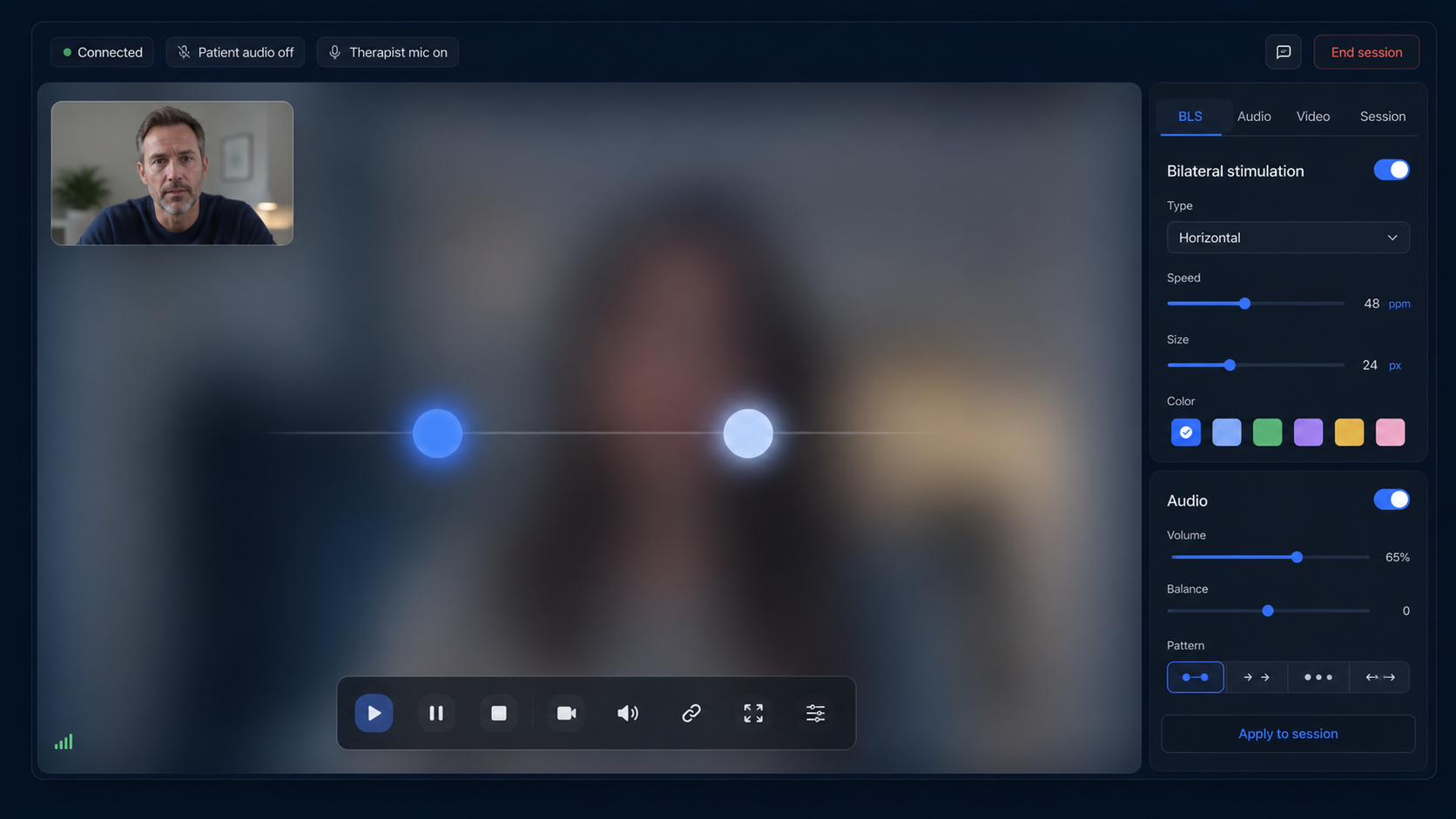
EMDRSuite does not investigate bullying, contact an employer, preserve legal evidence, certify leave or fitness, assess suicide, change working conditions, choose targets, or replace occupational health, union, legal, safeguarding, and emergency services.
FAQ
EMDR for workplace bullying
Is workplace bullying a PTSD diagnosis?
No. It is an exposure context; assess symptoms and diagnostic criteria separately.
Is EMDR proven for workplace bullying?
The cited evidence does not establish a direct EMDR treatment effect for bullying itself.
Can individual therapy solve an unsafe workplace?
No. Organizational, occupational, legal, or practical action may also be required.
Can EMDRSuite document a legal case?
No. Its clinical records are not an investigation or legal evidence-management system.
References
EMDR for workplace bullying: evidence, PTSD, and work action
EMDRSuite
Put the guide into practice with EMDRSuite
Run remote EMDR with visual BLS, bilateral sounds, secure patient links, video-ready sessions, saved settings, and notes.
Continue with related EMDR guides