Hofmann's Absorption Technique strengthens coping resources; it is not exposure by absorption
EMDR Absorption Technique: origin, evidence, and training
Understand Arne Hofmann's Absorption Technique, its RDI and inverted-protocol context, limited component evidence, protected instructions, and safeguards.
By the EMDRSuite Editorial Team
Product claims checked against the current EMDRSuite code and interface.
No independent clinical reviewer is named for this guide.
Hofmann adapted a wedging or strengthening procedure
Arne Hofmann's 2009 chapter describes the Absorption Technique as a German modification of a wedging or strengthening method. Its purpose is to connect a current or anticipated stressor with a selected coping skill, strength, or resource, including within the future phase of an inverted protocol for unstable complex presentations.
It is a resource-activation procedure, not a technique for absorbing trauma, suppressing symptoms, proving stabilization, or bypassing history taking. It also differs from the ordinary psychological trait called absorption and from standard trauma reprocessing.
Available studies do not isolate its effect
A single-case adolescent report combined Point of Power with Absorption. A chronic-pain group study used a modified pain-focused exercise inside a multicomponent program, and the EDEN depression trial included Absorption during stabilization within a much larger manualized treatment.
Those studies can show that the technique has been used in research packages, but they cannot establish its independent efficacy. No controlled dismantling trial, dose study, validated readiness threshold, or adverse-effect profile specific to Absorption was identified through 28 August 2026.
Resource activation can be neutral, mixed, or activating
Positive imagery is not automatically positive. A competence memory can evoke loss, pressure, shame, grief, dissociation, or fear of future failure. Clinicians should assess meaning, consent, current risk, dual attention, capacity to stop, and whether the selected resource actually remains accessible.
In remote work, confirm privacy, location and interruption plans, stable communication, and a clear stop route. The procedure does not replace a broader formulation, evidence-based treatment for the presenting condition, or clinical responsibility for pacing.
The protected clinical sequence is not reproduced
This reference identifies the chapter, purpose, evidence limits, and distinctions without publishing its prompts, sequence, set structure, or worksheets. Search demand for a PDF does not authorize copying the scripted protocol.
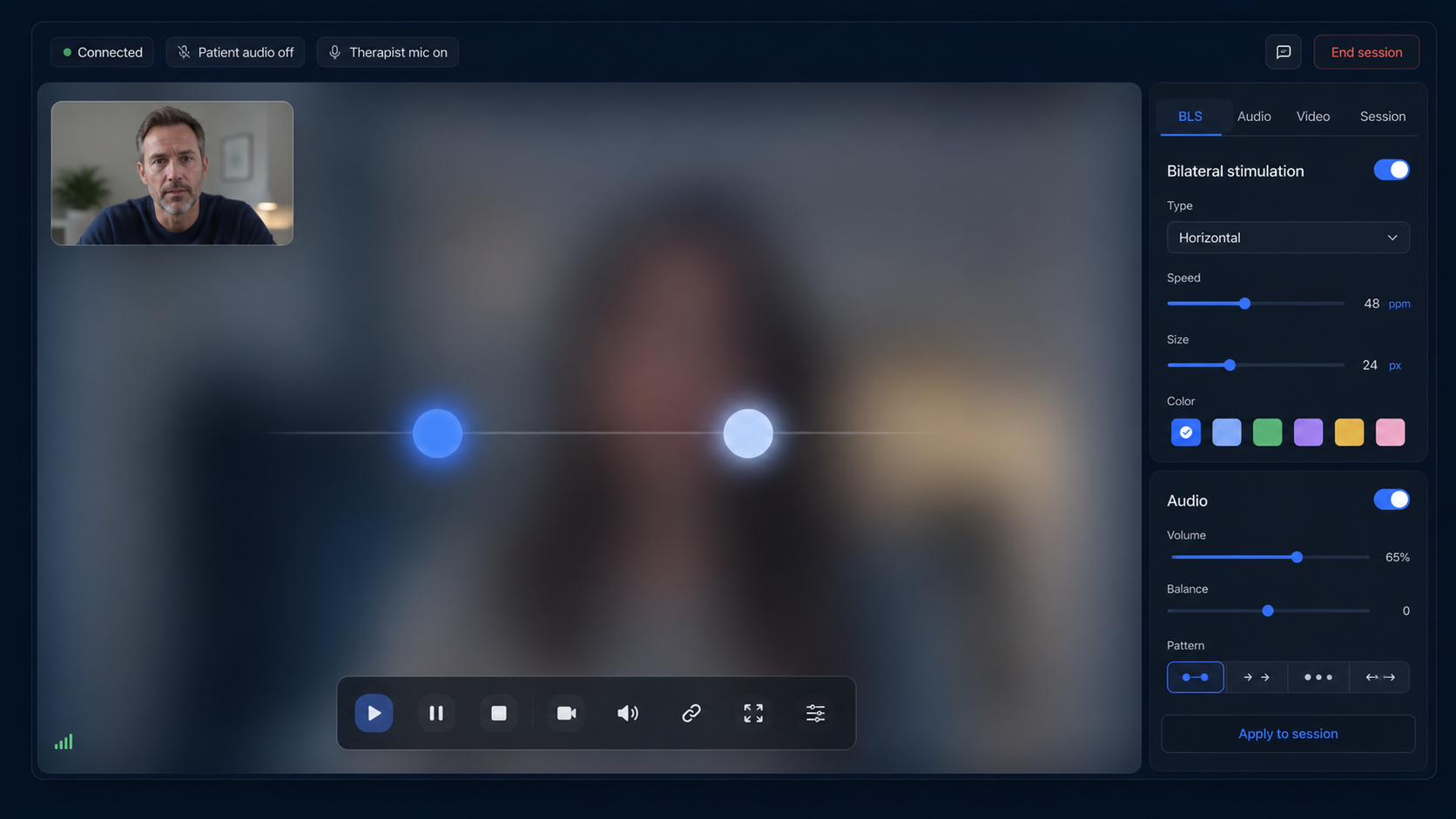
EMDRSuite can deliver therapist-controlled bilateral stimulation and record therapist-authored notes. It does not administer Absorption, select a coping resource, score stabilization, or recommend an inverted protocol.
FAQ
EMDR Absorption Technique
Who developed the EMDR Absorption Technique?
Arne Hofmann published the named technique in a 2009 chapter. He describes it as a modification of a wedging or strengthening procedure.
Is it the same as Resource Development and Installation?
It is a resource-strengthening procedure related to RDI, but it has a distinct published sequence and context. The broader RDI evidence should not be treated as proof of this component.
Has the technique been tested on its own?
No controlled trial isolating Absorption was identified. Published studies used it with other procedures or as a modified component.
Does this page provide the script?
No. It explains provenance and evidence boundaries without reproducing protected clinical instructions.
References
EMDR Absorption Technique: origin, evidence, and training
EMDRSuite
Put the guide into practice with EMDRSuite
Run remote EMDR with visual BLS, bilateral sounds, secure patient links, video-ready sessions, saved settings, and notes.
Continue with related EMDR guides