Resource figures belong to a named resourcing model, not a universal EMDR requirement
EMDR nurturing, protective, and wise figures: evidence and limits
Review Parnell's nurturing, protective, and wise figures, Resource Team terminology, evidence limits, cultural fit, training, and remote safeguards.
By the EMDRSuite Editorial Team
Product claims checked against the current EMDRSuite code and interface.
No independent clinical reviewer is named for this guide.
Parnell describes four Resource Tapping categories
The Parnell Institute describes calm or peaceful place, wise figures, nurturing figures, and protector figures as primary real or imagined resources in Resource Tapping and Attachment-Focused EMDR. Clinicians and searchers may collectively call supportive figures a Resource Team, but that label is not a separate validated protocol.
This named lineage is narrower than EMDR Phase 2 generally and differs from Leeds-style Resource Development and Installation. Standard EMDR does not require every client to imagine figures, and evidence for standard EMDR cannot automatically be transferred to Resource Tapping or AF-EMDR components.
Rationale and training are not component-level efficacy
Books, professional education, case material, and clinical discussions describe resourcing figures. RDI literature offers a wider rationale for accessing adaptive memories and qualities, while experimental work warns that eye movements can alter the vividness and emotionality of positive memories rather than simply make them stronger.
No controlled trial isolating nurturing, protective, or wise figures, and no validated Resource Team measure, were identified in the reviewed sources through 28 August 2026. Their presence in a model establishes provenance and use, not a universal preparation benefit or readiness test.
Imagined support must remain optional and culturally responsive
Some clients cannot visualize, dislike personified resources, experience protective figures as controlling, or find spiritual, family, authority, or attachment imagery activating. A resource can be sensory, relational, symbolic, embodied, remembered, or external; the client's language and consent should determine fit.
An imagined figure is not evidence of a recovered relationship, internal part, attachment diagnosis, supernatural presence, or actual protection. Monitor activation, dissociation, shame, grief, and dependency, and revise or stop when the exercise does not feel supportive.
This page does not reproduce a Resource Tapping script
The guide explains terminology, model ownership, evidence, and cautions without reproducing installation wording, tapping sequences, worksheets, or protected training. Clinicians considering the method should use original publications and authorized education.
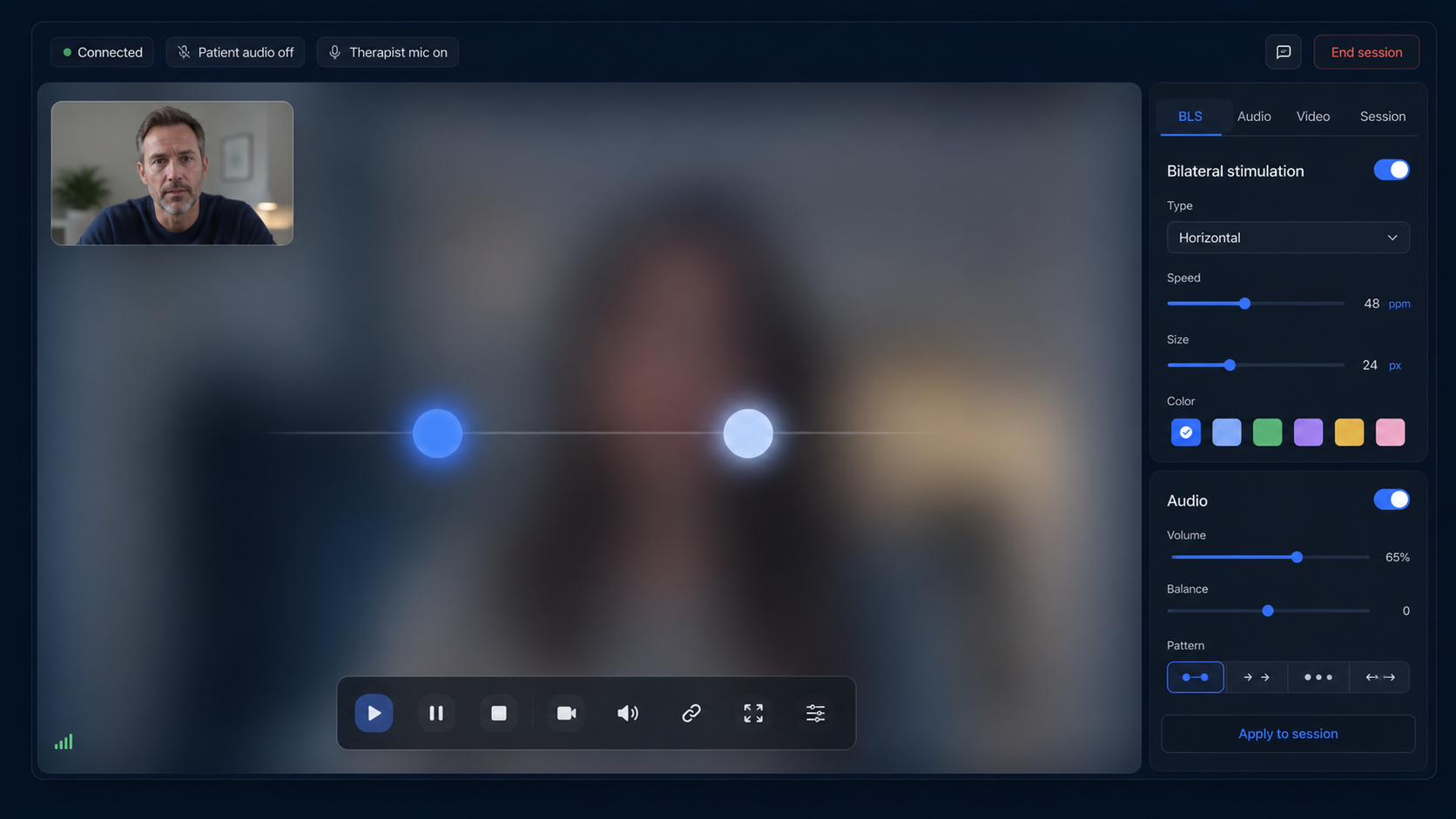
EMDRSuite provides therapist-controlled BLS, video, patient links, and notes. It does not invent resource figures, generate a Resource Team, interpret imagery, measure attachment, or decide that a client is ready for reprocessing.
FAQ
EMDR nurturing protective wise figures
Are nurturing, protective, and wise figures part of standard EMDR?
They are best known through Parnell's Resource Tapping and Attachment-Focused EMDR. Phase 2 can include many forms of preparation, but these figures are not mandatory for every standard EMDR case.
Is Resource Team a validated EMDR protocol?
No validated Resource Team measure or controlled component trial was identified. The term commonly groups supportive figures rather than naming a separately validated protocol.
What if a client cannot or does not want to imagine a figure?
Do not force it. Resources may be nonvisual, sensory, embodied, symbolic, relational, remembered, or external, and some clients need a different preparation approach.
Does EMDRSuite create or install resource figures?
No. The product does not generate imagery, interpret a figure, prescribe Resource Tapping, or determine clinical readiness.
References
EMDR nurturing, protective, and wise figures: evidence and limits
EMDRSuite
Put the guide into practice with EMDRSuite
Run remote EMDR with visual BLS, bilateral sounds, secure patient links, video-ready sessions, saved settings, and notes.
Continue with related EMDR guides