Agoraphobia is defined by situations, predictions, avoidance, and impairment
EMDR for agoraphobia: evidence, exposure, and treatment planning
Compare EMDR for agoraphobia with CBT and exposure evidence, panic assessment, mobility outcomes, safety behaviors, and functional recovery.
By the EMDRSuite Editorial Team
Product claims checked against the current EMDRSuite code and interface.
No independent clinical reviewer is named for this guide.
Assess the feared situations rather than assuming fear of open spaces
Agoraphobia may involve public transport, crowds, queues, enclosed or open places, or being outside home alone because escape or help seems difficult. The feared outcome may be panic, collapse, incontinence, disorientation, humiliation, or inability to reach safety.
Map avoided and endured situations, companions, routes, rescue medication, checking, escape plans, panic pattern, depression, substance use, disability and medical causes of dizziness or collapse. Real accessibility and neighborhood risks must not be relabeled as irrational avoidance.
The direct EMDR findings are mixed
A controlled trial found some improvement over waiting list but no significant EMDR advantage over a credible attention placebo and advised against first-line use without contradictory evidence. In an earlier 43-person study, advantages associated with eye movements had dissipated by three months.
A later 84-patient trial found EMDR non-inferior to CBT for agoraphobic cognitions and bodily-sensation outcomes, but mobility findings were inconclusive. Selected non-inferiority results do not establish equal effects on avoidance, independent travel, relapse, safety behaviors, or every patient.
CBT and exposure remain the reference comparison
NICE recommends CBT for panic disorder, with treatment organized around the assessed disorder and severity. The broader agoraphobia literature directly tests in-situ exposure, interoceptive learning, catastrophic predictions, and the reduction of avoidance and safety behaviors.
If EMDR targets a frightening attack, collapse, entrapment, assault, or future catastrophe, measure that memory and also real mobility. Lower distress in session is not functional recovery unless the person can approach necessary situations with less avoidance and dependence.
Remote software cannot conduct real-world exposure
Agree on goals such as using a bus, entering a shop, waiting in a queue, or leaving home alone, and define who coordinates exposure and medical or practical safeguards. Preserve informed choice about the stronger disorder-specific evidence.
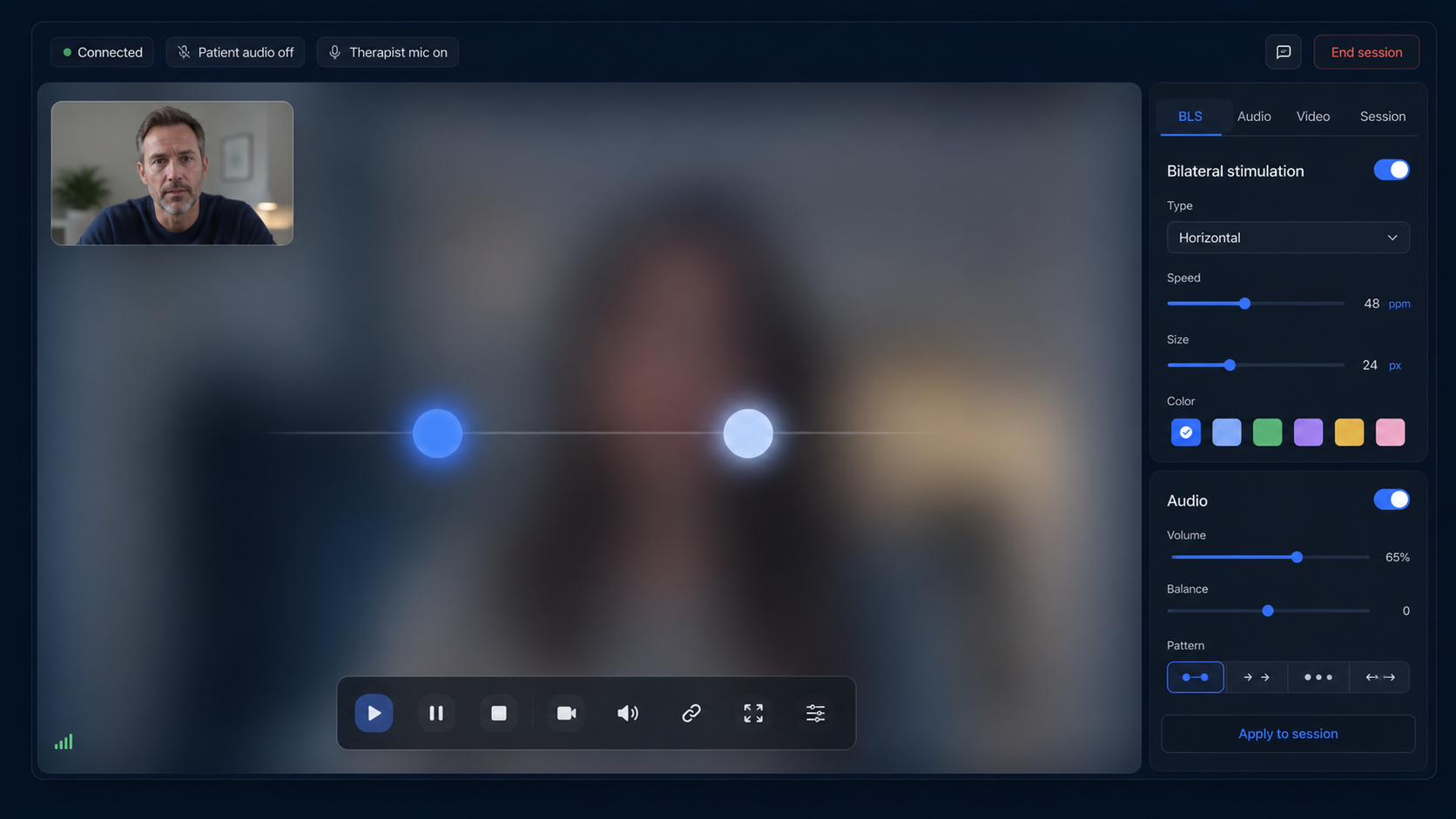
EMDRSuite does not diagnose agoraphobia, assess collapse or medical emergencies, conduct in-vivo or interoceptive exposure, track a person's location, choose targets, monitor risk outside the call, or guarantee independent mobility. It supports therapist-controlled remote sessions only.
FAQ
EMDR for agoraphobia
Is agoraphobia simply fear of open spaces?
No. It concerns several situations where escape or help may feel difficult, with avoidance and impairment.
Is EMDR proven to equal CBT?
One trial found non-inferiority on selected outcomes, while mobility was inconclusive and earlier controlled findings were mixed.
What should treatment measure?
Measure feared predictions, panic, safety behaviors, avoidance, independent mobility, functioning, and relapse.
Can EMDRSuite conduct exposure outside the home?
No. It does not conduct or monitor real-world exposure.
References
EMDR for agoraphobia: evidence, exposure, and treatment planning
EMDRSuite
Put the guide into practice with EMDRSuite
Run remote EMDR with visual BLS, bilateral sounds, secure patient links, video-ready sessions, saved settings, and notes.
Continue with related EMDR guides