An exam, audition, presentation, and competition are not one diagnosis
EMDR for test and performance anxiety: evidence and treatment limits
Review EMDR for test or performance anxiety against a 41-student component study, broader reviews, CBT, skills, accommodations, and measurable performance.
By the EMDRSuite Editorial Team
Product claims checked against the current EMDRSuite code and interface.
No independent clinical reviewer is named for this guide.
Define the performance problem before choosing a protocol
Test anxiety can involve worry, blanking, physiological arousal, avoidance, reassurance, procrastination, or impaired retrieval under evaluation. Performance anxiety can concern exams, auditions, sport, public speaking, clinical procedures, interviews, or observed work, each with different demands.
Assess preparation and study skills, sleep, caffeine or substances, ADHD, learning differences, language, disability, perfectionism, social anxiety, panic, depression, trauma and actual competence gaps. Reasonable educational or workplace accommodations are not safety behaviors to remove.
The direct EMDR study does not establish a full treatment effect
A 1995 study gave one hour of intervention to 41 undergraduates with test anxiety. All conditions improved on the Test Anxiety Inventory; eye movements produced lower subjective distress than no eye movements, but not a differential test-anxiety inventory result.
This component and expectancy design was small, brief, and did not establish better exam scores, durable change, superiority over CBT, or benefit across ages and performance settings. A broader review of 76 EMDR trials judged evidence outside PTSD insufficient because studies were few and often at high risk of bias.
Match intervention and outcome to the maintaining mechanism
A 30-year meta-analysis linked test anxiety with lower educational performance and with perceived difficulty and high stakes. Internet-delivered CBT for university anxiety has moderate pooled benefit, while performance-anxiety reviews find encouraging but heterogeneous effects across psychological approaches.
A distressing failure, humiliation, injury, hostile evaluator, or future image may be a memory target. Also measure attendance, practice, avoidance, sleep, preparation, accommodations, task-specific anxiety and actual performance rather than relying only on in-session distress.
Do not turn remote session tools into an exam simulator
Document whether the clinical target is PTSD, social anxiety, panic, perfectionism, a specific memory, or a circumscribed performance problem. Coordinate educational, occupational, coaching or medical input when the barrier is not primarily a memory.
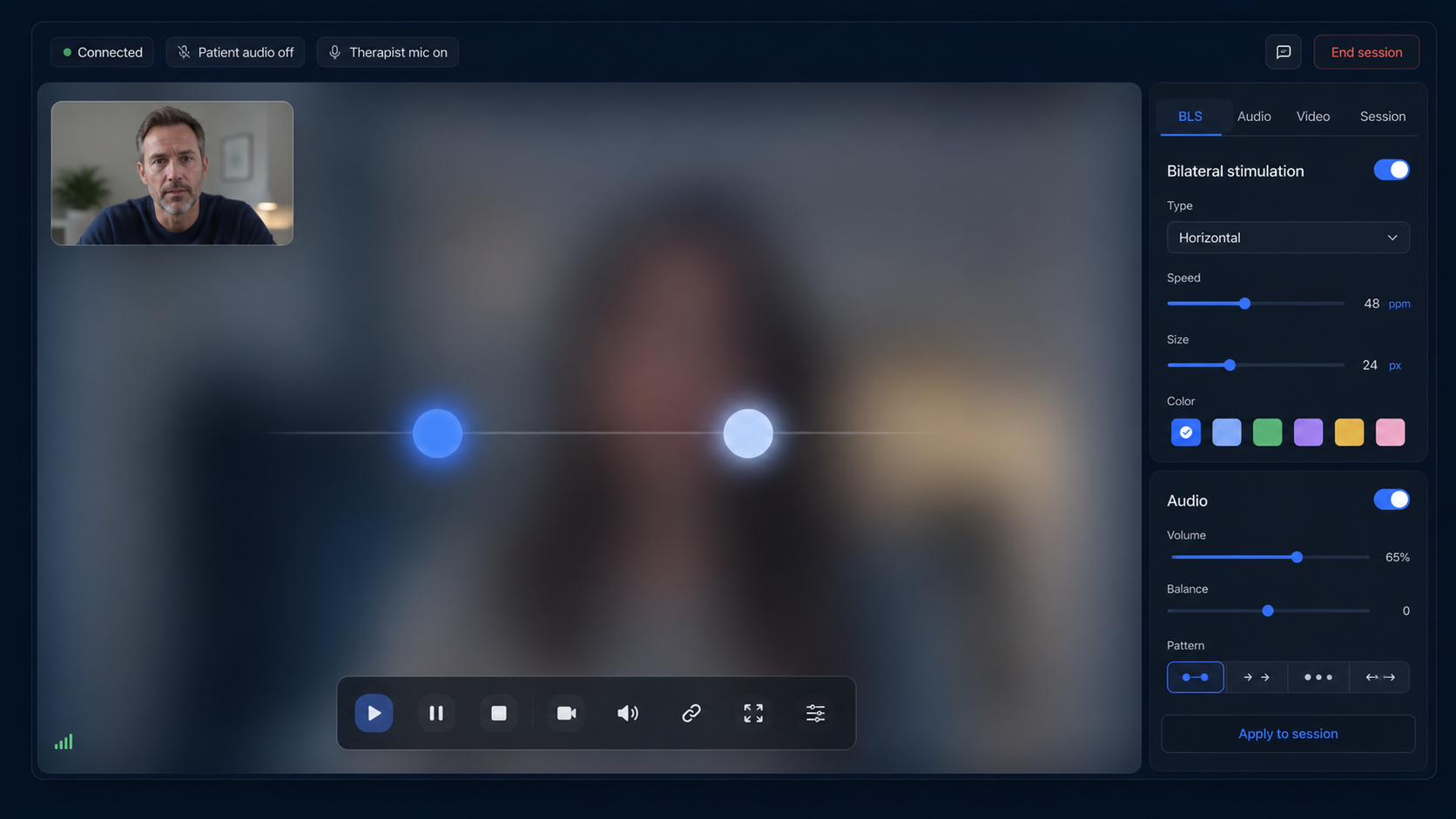
EMDRSuite does not diagnose test anxiety, assess learning needs, teach course content or study skills, arrange accommodations, simulate an examination, grade performance, select targets, or guarantee results. It only supports the qualified therapist's session workflow.
FAQ
EMDR for test anxiety
Does the eye-movement study prove EMDR treats test anxiety?
No. All 41 students improved on the test-anxiety inventory, without a differential eye-movement effect on that measure.
Is test anxiety a diagnosis by itself?
Not necessarily; differential assessment may identify social anxiety, panic, ADHD, learning needs, depression, trauma, or a circumscribed concern.
What outcomes matter?
Measure avoidance, preparation, sleep, task anxiety, accommodations, attendance, functioning, and actual performance where appropriate.
Can EMDRSuite provide exam accommodations?
No. It cannot assess or arrange educational or workplace accommodations.
References
EMDR for test and performance anxiety: evidence and treatment limits
EMDRSuite
Put the guide into practice with EMDRSuite
Run remote EMDR with visual BLS, bilateral sounds, secure patient links, video-ready sessions, saved settings, and notes.
Continue with related EMDR guides