A painful separation is not automatically PTSD or prolonged grief
EMDR after a breakup: relationship loss, evidence, and clinical choices
Review EMDR after a romantic breakup without pathologizing normal distress: direct evidence gaps, adjustment, safety, formulation, and treatment alternatives.
By the EMDRSuite Editorial Team
Product claims checked against the current EMDRSuite code and interface.
No independent clinical reviewer is named for this guide.
Breakup distress spans normal adaptation and clinical disorders
Sadness, longing, anger, sleep disruption, rumination, identity change, and reminders can be intense without constituting PTSD, prolonged grief disorder, or adjustment disorder. A 2025 review included 47 studies in emerging adults and found varied negative and positive outcomes, with long-term effects still inconclusive.
Clarify time course, functioning, coercion or stalking, domestic abuse, housing, finances, parenting, legal conflict, social support, substance use, depression, mania, PTSD, self-harm, and suicide risk. Do not use attachment labels to assign blame or infer a hidden memory.
A published breakup procedure is a proposal, not an outcome trial
The EMDR Break-Up Aid Procedure organizes intervention into three stages and adapts standard procedures for complex separations. The publication is a clinical proposal; it does not report a randomized comparison, sample outcome, response rate, or evidence that the procedure is superior.
That distinction matters. A coherent protocol can guide trained clinicians while still lacking efficacy evidence. Standard EMDR evidence for PTSD or research on bereavement cannot automatically be transferred to every romantic separation.
Broader adjustment research supports careful alternatives
A 2025 meta-analysis found 16 adjustment-disorder trials with 3,027 participants and suggested that in-person and internet CBT may help, while more trials are needed for other approaches. An earlier review rated the overall treatment evidence low to very low.
A French randomized web study included people bereaved by death or romantic separation, but it tested two grief-focused internet interventions, not EMDR. Discuss supportive therapy, CBT-based approaches, trauma-focused treatment when diagnostic criteria are met, practical support, and watchful recovery according to need.
Safety and agency come before memory processing
After coercive or violent relationships, current threat, digital surveillance, contact arrangements, children, and legal safety may be more urgent than processing. Reconciliation, no-contact, forgiveness, dating again, or a particular narrative must never be imposed as the treatment outcome.
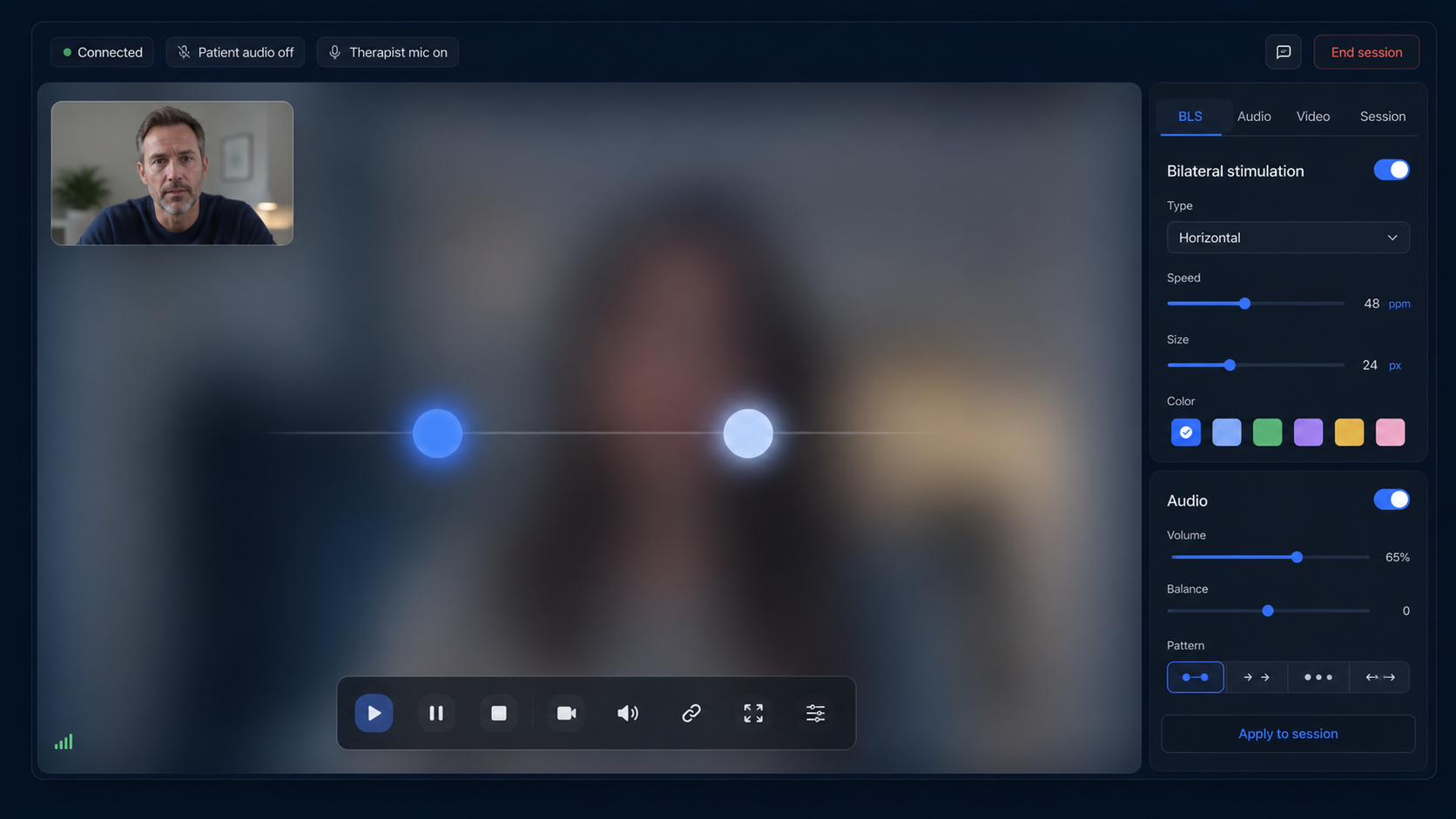
EMDRSuite provides private session links, video, bilateral stimulation, and records. It does not diagnose trauma or grief, detect abuse or stalking, provide crisis or legal services, decide contact boundaries, choose breakup memories, or guarantee that someone will move on.
FAQ
EMDR for breakup
Can EMDR help someone get over a breakup?
It may be considered for a clearly formulated target, but direct outcome evidence for breakup treatment is not established.
Is every breakup traumatic?
No. Distress can be severe without meeting criteria for a trauma-related disorder.
Is there an EMDR breakup protocol?
A three-stage procedure has been published, but it is a proposal rather than a randomized outcome trial.
Can EMDRSuite assess relationship safety?
No. Safety assessment and clinical decisions remain with qualified professionals and local services.
References
EMDR after a breakup: relationship loss, evidence, and clinical choices
EMDRSuite
Put the guide into practice with EMDRSuite
Run remote EMDR with visual BLS, bilateral sounds, secure patient links, video-ready sessions, saved settings, and notes.
Continue with related EMDR guides