DeTUR and CravEx are addiction-focused adaptations, not proven substitutes for addiction care
DeTUR vs CravEx: addiction-focused EMDR evidence and limits
Distinguish DeTUR and CravEx using direct studies, addiction-focused EMDR trials, craving outcomes, relapse care, and training limits.
By the EMDRSuite Editorial Team
Product claims checked against the current EMDRSuite code and interface.
No independent clinical reviewer is named for this guide.
DeTUR and CravEx organize addiction targets differently
DeTUR means Desensitization of Triggers and Urge Reprocessing and is described around positive goals, trigger hierarchies, urge reduction, resources, and relapse planning. CravEx is described as an EMDR approach to addiction memory and craving. They are not synonyms, standard PTSD EMDR, detoxification, motivational interviewing, CBT, medication, or mutual-help care.
Clarify the exact protocol and outcome. Reduced urge during a session is not abstinence, lower consumption, safer withdrawal, restored capacity, or durable recovery. Assess intoxication, withdrawal, overdose, suicide risk, medical instability, medication, trauma, housing, coercion, and the full addiction treatment plan.
Direct DeTUR evidence is mainly case-level or very small
Published DeTUR reports include a 13-year-old with internet gaming treated in four sessions, a four-man pathological-gambling case series, and a 14-person mixed-method self-regulation study. These can generate hypotheses but cannot separate protocol effects from attention, concurrent treatment, expectancy, regression to the mean, or natural change.
CravEx literature includes an early addiction-memory study and a preliminary opiate sample. Neither branded protocol has a large body of independent head-to-head trials. Search demand for a PDF or script should not be answered by reproducing copyrighted procedures or presenting case reports as efficacy.
Larger addiction-focused EMDR trials are mixed
A randomized alcohol trial assigned 109 outpatients to usual care with or without seven AF-EMDR sessions and found no added effect on drinking outcomes. A 30-person pilot found improvement in both AF-EMDR plus CBT and CBT-only groups, with no significant between-group difference.
A 2025 meta-analysis included 14 mixed-design studies and estimated a craving effect of g = 0.55, but addiction severity was not significant at g = 0.14; study quality was generally low and long-term evidence limited. This broader literature cannot prove DeTUR or CravEx specifically.
Remote software is an adjunct, not addiction treatment infrastructure
Use qualified addiction and EMDR assessment, informed consent, measurement beyond momentary craving, coordination with medical care, relapse and overdose planning, emergency contacts, privacy, stop procedures, and follow-up. Do not process through dangerous withdrawal or substitute a BLS session for evidence-based care.
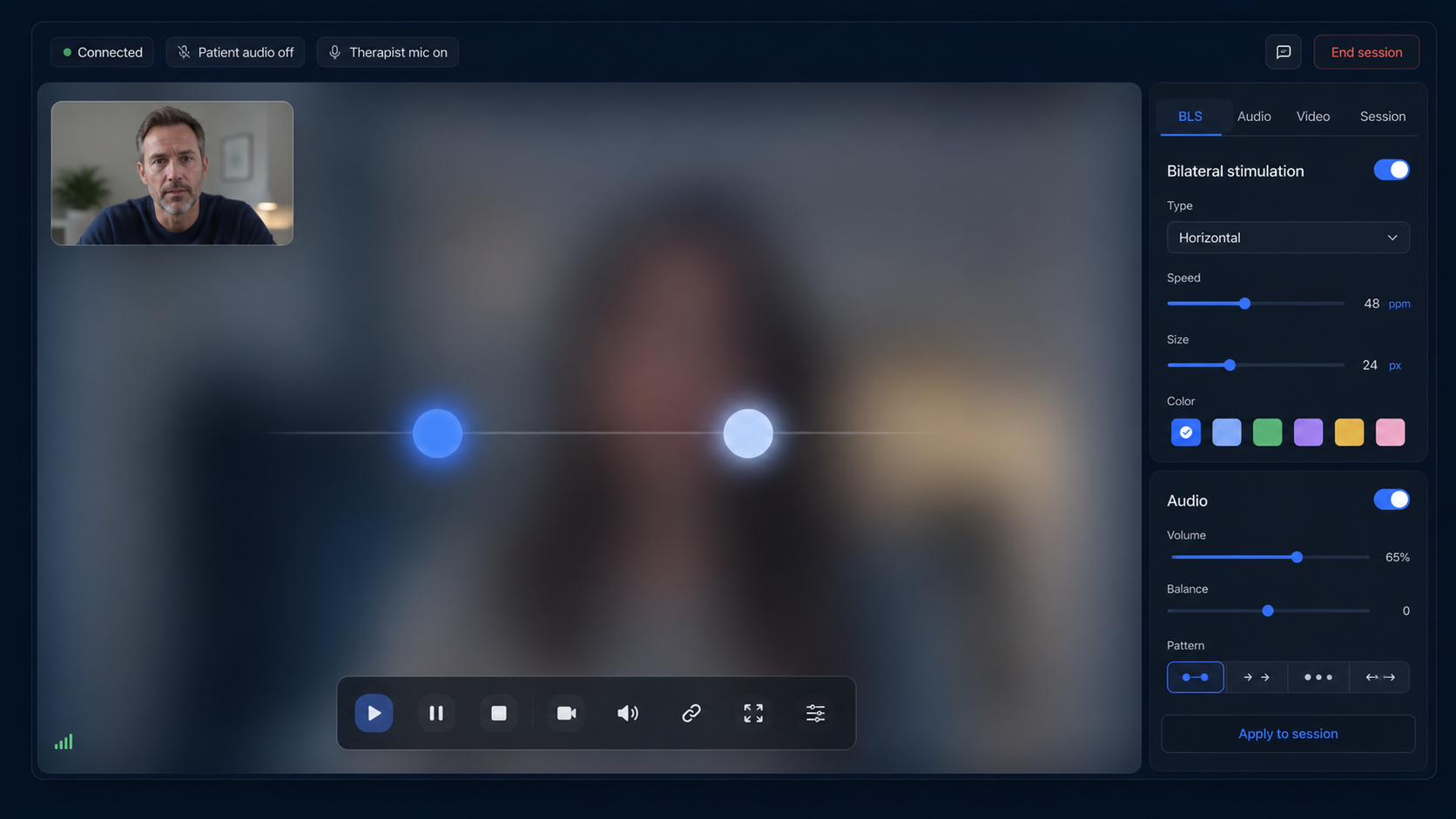
EMDRSuite provides individual remote-session and BLS controls. It does not include DeTUR or CravEx scripts, diagnose addiction, monitor intoxication or withdrawal, manage medication, predict relapse, deliver group recovery care, or certify protocol training.
FAQ
DeTUR vs CravEx
Are DeTUR and CravEx the same protocol?
No. They are distinct addiction-focused EMDR adaptations with different published descriptions.
Does reduced craving prove reduced substance use?
No. Craving, consumption, addiction severity, relapse, harm, and recovery are different outcomes.
What did the larger alcohol trial find?
In 109 outpatients, AF-EMDR added to usual care did not improve drinking outcomes over usual care.
Does EMDRSuite include DeTUR or CravEx?
No. It provides session technology, not protocols, addiction diagnosis, medical monitoring, or training.
References
DeTUR vs CravEx: addiction-focused EMDR evidence and limits
EMDRSuite
Put the guide into practice with EMDRSuite
Run remote EMDR with visual BLS, bilateral sounds, secure patient links, video-ready sessions, saved settings, and notes.
Continue with related EMDR guides