A popular search is not yet a first-line indication
EMDR for smoking cessation: craving evidence and treatment limits
Review EMDR for smoking cessation without promising a cure: nicotine craving studies, established quit treatments, trauma targets, outcomes, and clinical limits.
By the EMDRSuite Editorial Team
Product claims checked against the current EMDRSuite code and interface.
No independent clinical reviewer is named for this guide.
Smoking cessation and craving reduction are not the same outcome
A person can report less cue-induced craving and still smoke, relapse, or experience withdrawal. Trials should distinguish momentary craving, cigarettes per day, biochemically verified abstinence, relapse, adverse effects, and follow-up. A therapy claim based only on one of these outcomes is incomplete.
A randomized laboratory study of 47 daily smokers found immediate reductions in target-memory vividness and craving after a modified EMDR procedure with eye movements, but those effects were lost by one week. It was a component experiment, not evidence that standard EMDR produces durable smoking cessation.
The tobacco-specific evidence remains preliminary
A small 3MDR smoking study reported lower craving and cigarette use after a three-day intervention, but the added distractor task did not outperform the comparison and there was no treatment-as-usual control. The authors called for controlled confirmation. Broader addiction reviews combine different substances, protocols, designs, and outcomes.
These findings can justify research or a carefully framed adjunct, not the claim that EMDR is an established standalone tobacco treatment. Ask whether the proposed target is comorbid PTSD, a smoking memory, cue imagery, craving, or another process, because those are different clinical questions.
Do not displace established cessation care
WHO recommends behavioural support and effective pharmacological options such as nicotine replacement therapy, varenicline, bupropion, and cytisine where clinically appropriate. Medication choice, contraindications, withdrawal, pregnancy, physical illness, and interactions require qualified medical assessment.
If EMDR is considered, coordinate it with the quit plan rather than presenting it as a substitute. Define a quit date or other agreed goals, measure tobacco use and abstinence independently from distress, and establish what happens after lapses, worsening mood, or increased substance use.
Software cannot verify abstinence or manage withdrawal
Remote work needs identity, location, privacy, emergency contact, reconnection, and a way to stop stimulation. Intoxication, severe withdrawal, suicidality, chest symptoms, or other acute concerns can change the priority away from memory processing.
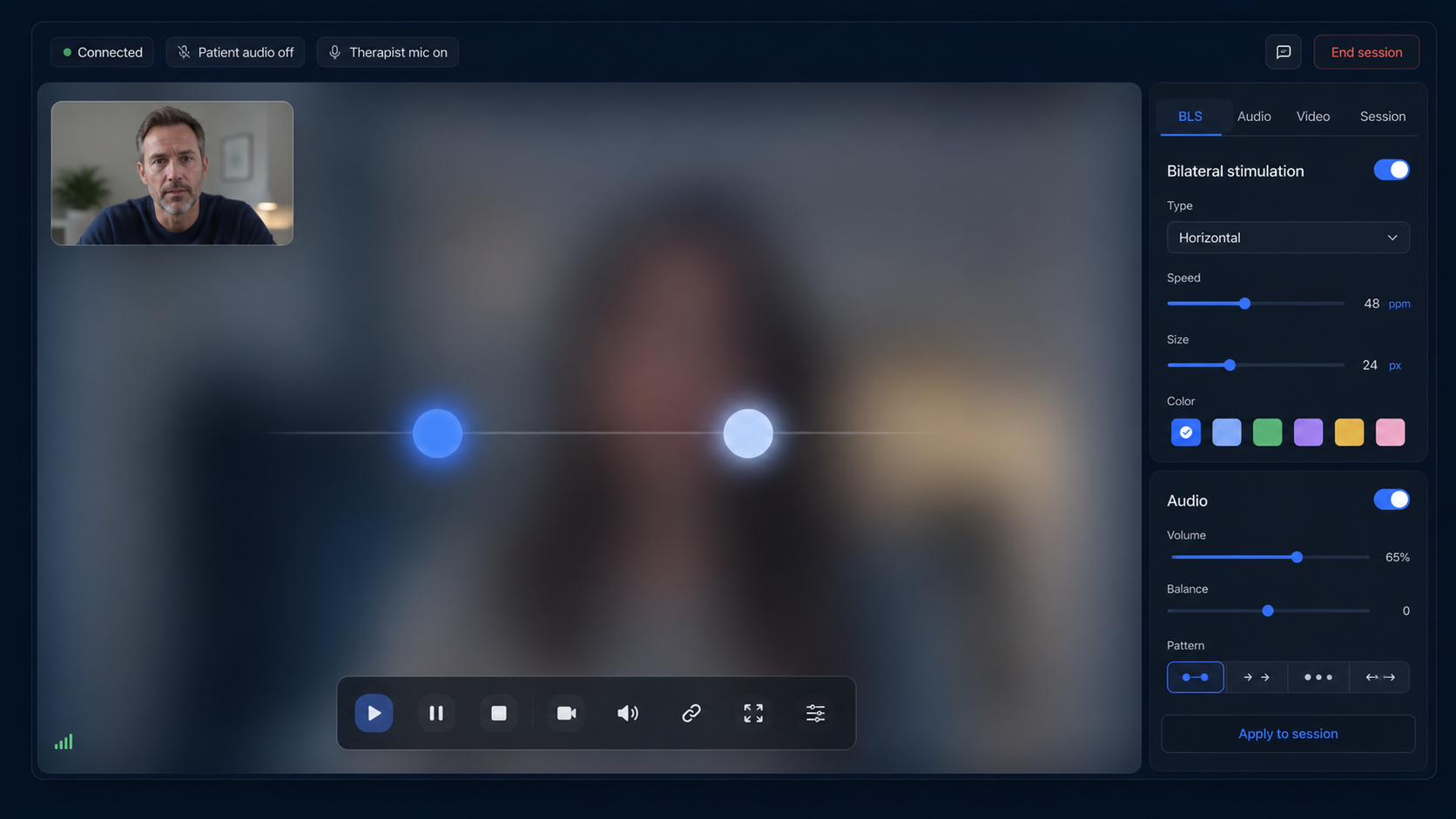
EMDRSuite provides video and therapist-controlled bilateral stimulation. It does not diagnose tobacco use disorder, prescribe cessation medication, measure carbon monoxide, verify abstinence, manage withdrawal, prevent relapse, or deliver emergency care.
FAQ
EMDR for smoking cessation
Can EMDR make someone stop smoking?
Current evidence does not establish EMDR as a reliable standalone smoking-cessation treatment.
Can eye movements reduce nicotine craving?
One small experiment found an immediate effect that was no longer present at one week; craving is not the same as abstinence.
Should cessation medication be stopped before EMDR?
No medication change should be made without the relevant prescriber.
Does EMDRSuite run a quit-smoking programme?
No. It only supports clinician-led remote EMDR technology.
References
EMDR for smoking cessation: craving evidence and treatment limits
EMDRSuite
Put the guide into practice with EMDRSuite
Run remote EMDR with visual BLS, bilateral sounds, secure patient links, video-ready sessions, saved settings, and notes.
Continue with related EMDR guides