Light Stream is guided imagery for self-control or closure, not evidence of memory reprocessing
EMDR Light Stream Technique: evidence, adaptations, and limits
Review the Light Stream Technique's phase-two and closure context, limited direct evidence, cultural adaptations, and remote-session safeguards.
By the EMDRSuite Editorial Team
Product claims checked against the current EMDRSuite code and interface.
No independent clinical reviewer is named for this guide.
Light Stream uses imagery around a currently noticed body sensation
Shapiro's third-edition manual lists Light Stream among self-control and closure procedures. Public professional resources describe attention to a disturbing body sensation and a personally meaningful light metaphor, with the aim of noticing whether the experience changes.
That places it near preparation, stabilization, pain-related resourcing, or closure depending on formulation. It is not a body scan phase, RDI, standard reprocessing, medical treatment, energy diagnosis, or proof that a sensation stores a literal memory.
No controlled trial isolates the Light Stream Technique
EMDRIA training demonstrates Light Stream alongside Four Elements in telehealth, and professional discussions describe clinical use. Training availability and case experience establish practice context, not component efficacy.
The Leeds review called for controlled research on widely used resources. No controlled outcome trial isolating Light Stream for PTSD, pain, anxiety, dissociation, or another condition was identified in the sources reviewed through 28 August 2026.
The metaphor must fit the person rather than the manual
EMDRIA clinicians note that light can carry different cultural meanings. For people harmed in spiritual, religious, medical, coercive, or sensory contexts, light entering the body, closing the eyes, or focusing internally may feel unsafe or suggestive.
Use consent, neutral inquiry, open eyes or another sensory channel, culturally meaningful language, and a clear option to stop. If symptoms may have a medical cause, imagery must not replace examination, pain care, medication review, or emergency assessment.
Remote use should not become a prerecorded promise of calm
A generic recording cannot assess dissociation, current danger, escalating distress, psychosis, neurological symptoms, accessibility, or whether the metaphor is tolerable. Agree present-orientation cues, contact limits, reconnection, closure, and follow-up.
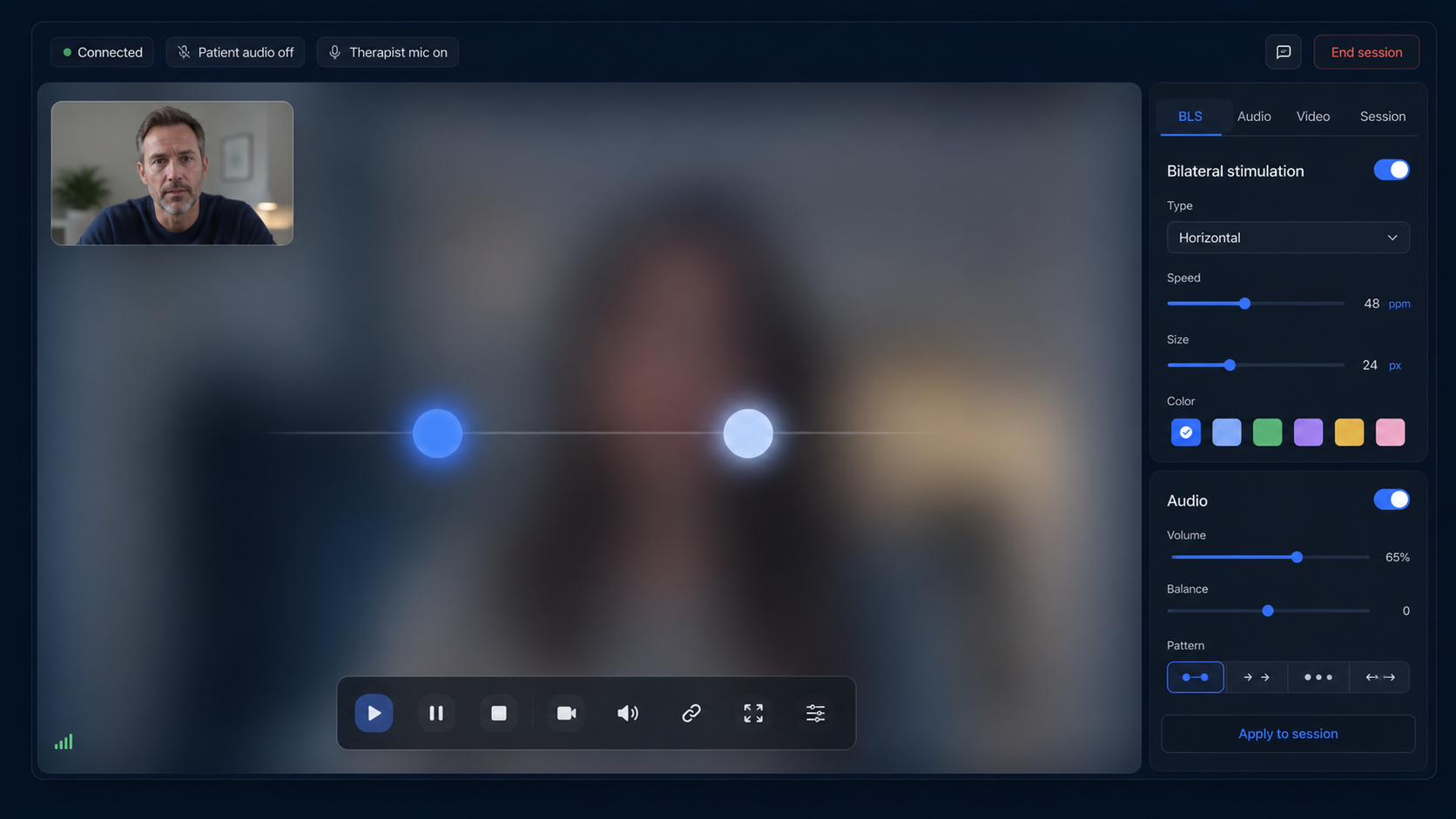
EMDRSuite offers therapist-patient video and controlled BLS. It does not generate healing-light imagery, interpret body sensations, guarantee regulation, provide a copied script, diagnose pain, or replace trained clinical care.
FAQ
EMDR Light Stream Technique
What is Light Stream used for in EMDR?
It is commonly described as guided imagery for preparation, self-control, stabilization, or closure around a current body sensation.
Is Light Stream the same as EMDR reprocessing?
No. It is a resource procedure, not the full standard protocol or evidence that a memory was reprocessed.
Does Light Stream have its own controlled trial evidence?
No controlled outcome trial isolating the technique was identified through 28 August 2026.
Does EMDRSuite provide a Light Stream recording?
No. It supports live therapist-led sessions and does not provide scripts, recordings, interpretation, or medical advice.
References
EMDR Light Stream Technique: evidence, adaptations, and limits
EMDRSuite
Put the guide into practice with EMDRSuite
Run remote EMDR with visual BLS, bilateral sounds, secure patient links, video-ready sessions, saved settings, and notes.
Continue with related EMDR guides